


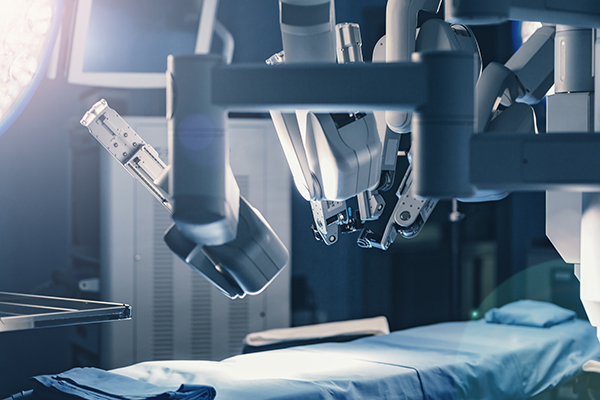
Johnson & Johnson's OTTAVA finally has FDA authorization, and there is now a three-way race in the multi-procedure robotic surgery segment. It is easy to compare the three platforms feature for feature, as all the companies will do, but the more useful question isn't necessarily which company has the best robot, or instruments or visualization. The competition in surgical robotics is a “biomarker” of the future basis of success in medtech more broadly.
Why Hardware Matters as a Competitive Advantage
Hardware is back on the table, quite literally in the case of OTTAVA, which touts integration with the OR table as a key advantage. For a long time, strategic and financial investors have flocked to single-use devices that promise high margins, fast growth and the ability to gain share more quickly than building an installed base.
What we have learned through the success of Intuitive’s da Vinci surgical robotic system is that hardware creates stickiness and upsell pathways that can be leveraged into recurring revenue streams on instruments, software and even supplies.
Data Capture Drives Future AI Value
Tying back to the hardware point, hardware embedded in clinical workflow, like robots, lap towers or monitors, is in the unique position of enabling data capture for AI. The intelligence being gathered isn’t necessarily limited to that specific platform, either.
A surgical robotic platform can capture a lot of data on how humans interact with the technology, along with what else humans are using, doing or not doing. They are also collecting anatomical and physiologic data to build the foundation for AI solutions that ultimately improve safety and efficacy of device-based interventions.
The Next Market Opportunity: Outpatient Care
New market opportunities are emerging in outpatient settings of care. With their high price tags, robotic platforms have traditionally been cost-prohibitive in the non-hospital outpatient arena. The biggest barriers have been the cost of capital, higher-priced dedicated consumables, and longer procedure times, especially in the context of lower ASC reimbursement.
Whoever can break this barrier with creative modular systems, lower-cost instruments, streamlined workflows and flexible financing models could capture that emerging installed base and lock out competitors. Imaging companies have figured out how to sell expensive systems in the office-based labs for vascular procedures – robots can get there, too.
At S2N Health, we partner with medtech companies to develop future-looking go-to-market strategies and then provide the deep, CRM- and AI-integrated commercial intelligence to execute those strategies in the field for end-to-end success. Learn more about how we turn insights into action with RepSignal, or book a demo to see how our team can support your goals.