


Entering a new market is one of the highest-stakes moves in any MedTech go-to-market strategy. The product may be innovative, the clinical data compelling, and the commercial team ready to execute. But without the right market intelligence, even the best medical device launch strategy can stall.
MedTech market development teams face a particular challenge: unlike reps in established markets who carry years of territorial knowledge, teams entering new or emerging markets are often starting from scratch. Tribal knowledge doesn't exist yet. Territories are being built, not inherited. And the decisions made in the first few months — which accounts to prioritize, which physicians to target, where referral pathways exist — have outsized consequences.
Here's what MedTech sales teams need to understand before day one.

Understand the Reimbursement and Access Reality at Your Target Accounts
Regulatory clearance is only the beginning, and reimbursement is often where strong product stories hit an unexpected wall. For market development teams, this challenge is compounded by the fact that coverage is frequently still evolving. What insurers cover today may look different in six months.
Before launching, teams need clear answers to:
- Which accounts have a favorable concentration of payers covering their technology?
- Where do VAC review cycles fall, and which IDNs have existing policies on similar device categories?
- How does the reimbursement picture vary across geographies and facility types?
RepSignal's payer mix intelligence helps teams identify the most financially favorable accounts and track how the coverage landscape shifts over time, so reps can address reimbursement objections proactively rather than scrambling mid-conversation. RepSignal® also surfaces health system structures and facility-level data that help reps understand VAC dynamics and access requirements before they ever walk through the door.
When historical ROI data doesn't yet exist, S2N's consulting team can build economic models that help sales teams credibly quantify product value for hospital finance and administration stakeholders, grounding the conversation in numbers before your own case studies do.
Map the Competitive Landscape Before Your Competitors Map You
In a new market, you're not just introducing a product; you’re often displacing the existing standard of care. High-performing MedTech commercial teams build their go-to-market strategy around a clear view of the competitive landscape. They identify:
- Which facilities are entrenched with a competitor
- Which physicians have a track record of adopting new technology
- Where early wins are most likely given procedure volume and competitive openness
RepSignal surfaces this through physician involvement in clinical trials and publications (a strong signal of openness to new technology) and industry payment data showing which physicians are already tied to competitors.
For teams that need a deeper cut, S2N's analytics team builds custom lead scoring models that combine procedure volume, payer mix, publication history, and more, identifying the highest-probability targets before your reps spend a single day in the field.
Identify the Right Entry Points: Facilities, Physicians, and Referral Networks
Not all accounts are equally ready. Smart market entry builds early momentum at the right accounts rather than spreading resources thin. A data-driven strategy targets:
- High-volume facilities with strong procedural activity in your clinical area
- Physicians who match the profile of likely early adopters
- System-level entry points where an IDN relationship can unlock multiple facilities at once
Another crucial piece of any MedTech market access strategy: referral pathways. For many novel technologies, the physicians performing a procedure aren't the only ones driving patient flow. Understanding where patients come from — and which upstream referrers are sending them — is critical to building sustainable market development.
S2N has helped clients map exactly this: for one medical device company entering a new procedural market, we identified the upstream referral relationships driving patient flow to their target proceduralists, giving their team a roadmap for market development beyond the implanter. For another client entering a new indication, we integrated their existing account data with market-level signals to build ROI calculators that helped reps make the financial case at the point of sale.
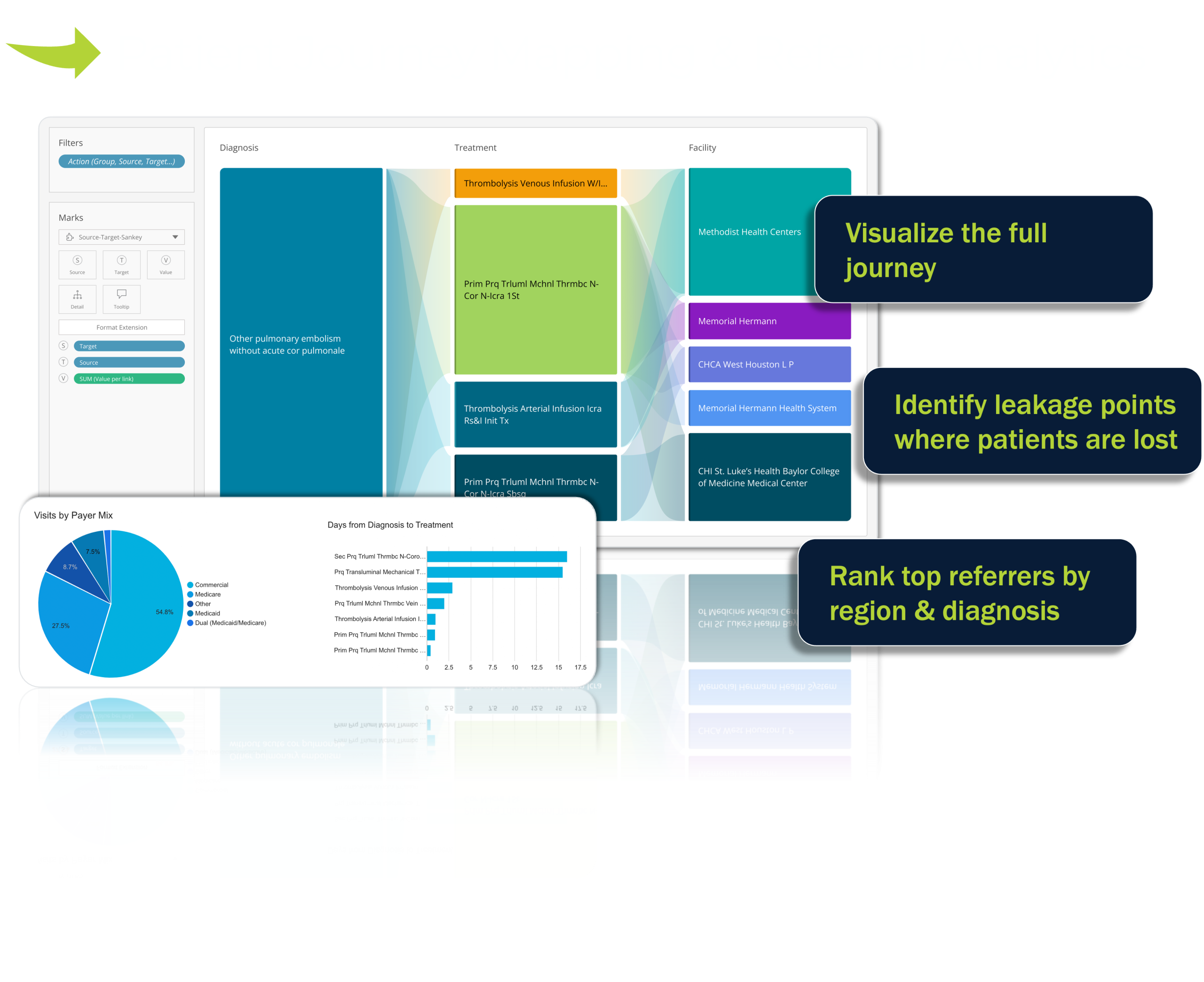
RepSignal's referrals feature supports this kind of mapping — and for teams that need a more complete picture, S2N's advanced patient journey analytics use longitudinal data to map the path a patient takes across facilities and providers, surfacing the entire referral network from first touch to procedure.
Build the Intelligence Foundation Before the Field Team Deploys
The teams that enter new markets most effectively compress the learning curve before reps ever make their first call, with:
- Account lists built from real procedure and facility data
- Reps equipped with competitive and reimbursement context from day one
- Territory plans structured around opportunity rather than geography alone
S2N's consulting team builds custom TAM and market models that give leadership a credible, decision-ready view of the total market opportunity — paired with DataStream's ability to track procedure growth and market trends over time.
The market opportunity is there. The question is whether your team has the intelligence to move on it.
Ready to build your market entry intelligence foundation? Schedule a custom demo today to get started.